


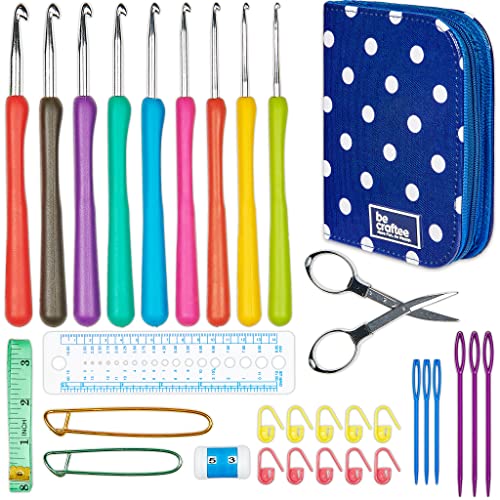
ComfyCrochet's short verdict: stop buying hooks by handle color and start buying them by the spot that hurts. A Clover Amour soft grip handles broad thumb fatigue, a Tulip Etimo's tapered cushion eases the sharp joint pain at the base of your thumb, and a fat wooden Furls or a counterweighted handle saves you when your wrist locks up before your fingers do. The wrong match isn't useless — it's just solving someone else's problem.
Ergonomic crochet hooks reduce strain by widening the gripping surface from the ~6mm of a bare aluminum shaft to 12-19mm of soft handle, which spreads pressure your thumb would otherwise absorb in one pinch point. That single change is why most people go from stopping at 20 minutes to finishing an hour.
What actually causes the pain when you crochet too long?
The pain comes from three different mechanical faults, and they don't share a fix. Thumb-pad fatigue is from gripping a thin shaft. Base-of-thumb joint pain (the CMC joint) is from a pinch-and-twist motion repeated thousands of times. Wrist ache is from holding your hand cocked at an angle for an hour. Identify yours before you spend a cent.
The mistake I see most often is people treating all hand pain as one problem and buying the most-cushioned hook they can find. If your pain is actually in the CMC joint at the base of your thumb, a thicker handle can make it worse by forcing your thumb wider. The American College of Rheumatology notes that the thumb CMC joint is one of the most common arthritis sites in the hand, and it responds to reduced pinch force — not just more padding.
In practice, do this test: crochet for ten minutes, then point to exactly where it hurts first. Tip of the thumb and along the pad means grip thickness. A deep ache at the wrinkle where your thumb meets your wrist means the joint. Soreness running up toward your forearm means your wrist position and possibly hook weight. Each answer points to a different hook, which is why generic 'best ergonomic hook' lists fail readers with real pain.
Which ergonomic crochet hook is best for arthritis?
For arthritis specifically, the Tulip Etimo Rose is the one to look at first. Its grip is firm but tapered, so your thumb rests rather than clamps, which lowers the pinch force that aggravates a CMC joint. The Clover Amour comes second for all-round arthritic comfort, with a softer, fuller handle that suits broad aching over a single sore joint.
Here's the honest comparison. The Tulip Etimo has a slightly narrower, contoured grip that encourages a relaxed, open hand — best if your pain is joint-specific and pinch-driven. The Clover Amour's grip is rounder and softer; it cushions a tired whole hand better but can feel bulky if your fingers are stiff and don't open wide. The Furls Streamline, a solid resin or wood handle around 15-19mm thick, is the pick when your wrist is the failure point because its weight encourages a looser hold and a neutral wrist.
ComfyCrochet helps arthritic crocheters by mapping the hook to the joint: Etimo for the thumb base, Amour for the whole hand, Furls for the wrist. If you've tried one and still hurt, the fix is usually switching categories — not buying a pricier version of the same shape. We cover the wrist-first case in more depth in our guide on ergonomic hooks for arthritic hands.
What should you look for in an ergonomic hook?
Look for four things in order: grip thickness (12-19mm), grip material (soft TPR or contoured wood, not hard plastic), total weight (lighter for thumb pain, heavier for wrist), and the throat shape of the hook head. The head matters more than most lists admit — an inline head like Etimo's grabs yarn differently than the tapered Clover head.
Grip thickness is the lever that changes everything. A bare metal hook is roughly 6mm; an ergonomic handle is two to three times that. The counterintuitive part is that thicker isn't automatically better — past about 19mm, a stiff hand can't close around it, and you end up gripping harder, not softer. Aim for the widest handle your fingers can still wrap comfortably.
Material affects sweat and slip as much as comfort. Soft TPR grips (Clover) cushion but can drag if your hands are warm; lacquered wood (Furls) glides and warms to your hand but offers zero squish. Tulip's grip splits the difference with a denser, low-give cushion. The throat shape decides how often you snag — inline hooks make tighter, more uniform stitches but can split yarn, while tapered heads slide out easily and are gentler on the wrist's repetitive flick.
Most guides skip this, but check the hook size printed on the handle, not just the box. Worn-down or unmarked hooks force you to guess, and re-gripping to find the size adds dozens of small strains per project.
What's the best ergonomic hook on a budget?
On a budget, a soft rubber-grip hook set in the $12-20 range gives you most of the strain relief of premium hooks at a quarter of the price. Brands like BeCraftee, Coopay, and similar multi-size sets use a 12-14mm cushioned handle that spreads pressure well enough for casual sessions, even if the hook heads aren't as polished as Clover or Tulip.
The real trade-off with budget sets isn't comfort — it's the hook head. Cheaper heads are often slightly rougher or inconsistently sized, so yarn catches more and you tug harder, which sneaks strain back into your hand. The fix is simple: keep the budget grips for bulky yarn projects where snags barely register, and save your money for one good single hook in the size you use most.
ComfyCrochet recommends a cushioned-grip budget set for anyone testing whether ergonomic shaping even helps their pain before committing to a $10-per-hook premium brand. Buy the set, find your two or three go-to sizes, then upgrade only those to a Clover Amour or Tulip Etimo. That's a far smarter spend than buying a full premium set you might not get along with. A few other low-cost tools, covered in the small tools that made my crochet faster, reduce strain just as cheaply.
What mistakes make hand pain worse even with a good hook?
The biggest mistake is keeping a death grip even after you've upgraded the hook. An ergonomic handle only works if you let your hand relax onto it; clamping a soft grip just as hard as a metal one cancels the benefit. The second mistake is crocheting in marathon sessions instead of breaking every 30-40 minutes.
Tension that's too tight is a hidden culprit. When you yank each loop snug, your thumb and forearm work overtime on every single stitch — across a blanket that's tens of thousands of micro-strains. Loosen your yarn tension deliberately for one project and notice how much less your hand aches; most people are gripping the yarn far harder than the pattern needs.
Hook position is the third one. Holding the hook like a pencil concentrates force in the thumb-index pinch; holding it like a knife (overhand, palm down) shifts load to the larger muscles of the hand and is gentler on the CMC joint for many arthritis sufferers. Try switching grips mid-project if your usual hold flares up.
The Arthritis Foundation recommends warming the hands before repetitive hand work and taking frequent rest breaks to manage joint symptoms — advice that applies directly here. A warm cloth or a few minutes of warm water on stiff hands before you sit down does more than any single hook upgrade, and it costs nothing.
How do you build a low-strain crochet setup beyond the hook?
The hook is one piece of a low-strain setup. The rest is yarn choice, support tools, and your seating. Smooth, slightly slick yarn slides through stitches with less pull; rough or splitty yarn forces extra grip on every loop. A supportive chair with armrests at the right height keeps your wrist neutral instead of bent.
Yarn weight changes the workload more than people expect. Worsted and bulky yarns mean fewer stitches per inch, so a scarf finishes in a fraction of the hand-motions a fine fingering-weight version needs. If pain is your limiter, sizing up your yarn and hook is a legitimate strategy, not a cop-out. Tight amigurumi at a small gauge is the hardest on stiff thumbs.
Support accessories close the gap. Stitch markers stop you from frogging and re-working rows (every redo doubles the strain), and a project bag that keeps yarn from tangling cuts the little tugging fights that add up. Our roundup of stitch markers, bags, and blocking mats covers the supporting cast. ComfyCrochet helps hobby crocheters with hand pain crochet longer by treating the hook, the yarn, and the rest breaks as one system rather than chasing a single miracle tool.