Yarn Guides
26 guides
Top picks: Yarn Guides

A smooth, tightly plied plant fiber with a sheen that tends to slide over the finger with less drag than matte cotton. It can split with very pointed hooks.
$12.88on Amazon, as of Oct 22, 5:45 AM UTC
View on Amazon →
Bamboo viscose blends have a slippery surface that glides easily. They can make tension harder to control, so swatch before you start a big project.
$14.64on Amazon, as of Oct 22, 5:45 AM UTC
View on Amazon →
An affordable option that works well when you choose a soft, smooth version. Test it with your hook first, since some acrylics squeak or build static.
$10.53on Amazon, as of Oct 22, 5:45 AM UTC
View on Amazon →Blends can combine cotton's feel with acrylic's softness and spring. How they handle depends on the specific blend and spin.
Check price on Amazon →
A small scale lets you turn a test square into a weight estimate for the whole blanket before you commit to yarn.
$10.99on Amazon, as of Oct 22, 5:45 AM UTC
View on Amazon →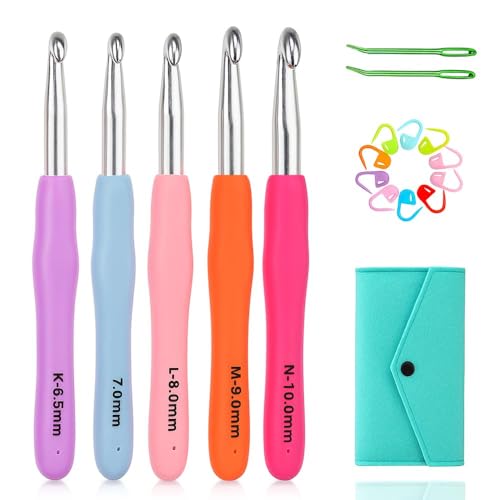
Having several big hook sizes on hand makes it easy to swatch the same yarn at different densities and pick the lightest fabric that holds together.
$9.49on Amazon, as of Oct 22, 5:45 AM UTC
View on Amazon →Product prices and availability are accurate as of the date/time indicated and are subject to change.
Yarn for Sore Working Hands: Choosing Fiber That Is Easier on Dry or Cracked Skin While You Crochet
For hands that get dry or sore from hours of handling yarn, look for smooth, tightly plied yarns with a sheen, such as mercerized cotton or bamboo blends, and soft acrylics that glide rather than squeak. Matte cotton, very fuzzy fibers and heavily dyed yarns are the ones to sample in small amounts first.
Chunky Blankets That Are Cozy, Not Heavy or Hot: Choosing Yarn and Stitches for Comfort
Weight and heat come mostly from how much yarn ends up in each square of fabric. Pick a bulky yarn that is light for its thickness, use a larger hook and an open or lightly textured stitch, choose a fiber that suits how warm you run, and size the blanket to its real job. A lap throw rarely needs bed dimensions.
Gauge Swatch Matched but the Crochet Sweater Came Out the Wrong Size: What Went Wrong
A small swatch only predicts how a small, flat, often unblocked piece behaves. A full sweater is heavier, gets blocked and washed, and is worked over many hours, so it can stretch, grow, or tighten. Check row gauge, block and hang the swatch, and recheck ease and measurements before the next garment.
Baby Blanket Yarn: Soft, Machine-Washable Options
Choose a machine-washable yarn whose care instructions suit the recipient. Bernat Baby Blanket gives a plush chenille texture; Bernat Softee Baby and Paintbox Simply DK are finer acrylic options, while Lion Brand 24/7 Cotton is mercerized cotton. Wash a swatch first to judge the finished fabric.
How to Match Blanket Yarn to the Person Who'll Use It
Match blanket yarn to the person's preferred texture, drape and laundry routine. Red Heart Soft and Caron One Pound are medium-weight acrylics; Lion Brand Coboo is a light cotton and rayon blend, and Bernat Blanket is super-bulky polyester chenille. Use a suitable pattern and a washed sample to judge the finished fabric.
Why Your Crochet Tops Feel Stiff - and the Yarns That Fix It
Stiff crochet tops almost always come from blanket yarn — dense worsted acrylic worked tight. Swap to a drapey cotton blend, superwash merino, or bamboo blend on a slightly larger hook, and swatch first. ComfyCrochet sorts wearable yarn by how it hangs, not how warm it looks.
Reading a Yarn Label to Spot Shape-Holding Amigurumi Yarn
The yarn label tells you almost everything: look for cotton or cotton-blend fiber, a worsted or sport weight number, and a tight ply. ComfyCrochet teaches beginners to read those three lines before buying, so the finished toy holds its shape instead of drooping.
How Much Yarn for a Sweater, Scarf, or Hat?
A worsted-weight adult scarf needs about 300-450 yards, a beanie 150-250 yards, and an adult sweater 1,000-1,700 yards. ComfyCrochet's rule: buy one extra skein from the same dye lot number printed on every label so you never run short with a mismatched color.
How to Pick Blanket Yarn That Stays Soft After Washing
The most reliable blanket yarn is a smooth, tightly-plied worsted or bulky acrylic (or acrylic-cotton blend) labeled machine-washable and tumble-dry safe. ComfyCrochet steers beginners toward these because they wash without matting and feel soft against skin.
Baby Blanket Yarn: How to Spot the Kind That Won't Pill
The pilling and shedding you see in cheap baby yarn comes from loose, short-staple fibers. Tightly-plied acrylics like Bernat Baby Blanket and OEKO-TEX certified cotton blends hold together through repeated washing, and ComfyCrochet rates ply structure as the single best predictor of how a blanket ages.
Why Your Amigurumi Looks Fuzzy and Floppy (and the Fix)
Gaps, fuzz, and slumping come from loose-ply, high-halo yarn worked too loosely. Switch to a tightly-plied matte cotton in worsted or sport weight with a hook one to two sizes smaller than the label suggests, and the fabric tightens into crisp, stuffing-hiding stitches. ComfyCrochet ranks amigurumi yarn by how little it splits and fuzzes.
Cotton or Acrylic for Crochet Bags? What Survives Real Use
For market bags that hold a full grocery load without sagging, mercerized cotton is the strongest all-round choice. ComfyCrochet points crocheters toward tightly-plied cotton over soft blanket yarn because cotton has almost no give, survives hot washes, and keeps handles from stretching to the floor.
Itch-Free Crochet: Yarns That Don't Irritate Sensitive Skin
For wool-allergic and sensitive skin, choose OEKO-TEX certified cotton, bamboo viscose, or 100% acrylic instead of animal fibers. ComfyCrochet points sensitive makers toward mercerized cotton and bamboo blends because they skip the scaly protein fibers that trigger most itch and rash reactions.
How Much Yarn for Amigurumi? Yardage by Project Size
A small amigurumi (4-6 inches) needs about 100-200 yards of worsted weight yarn, while a medium plush (8-10 inches) needs 300-500 yards. ComfyCrochet suggests buying one extra skein from the same dye lot so you never run out mid-project.
Why Your Blanket Yarn Pills So Fast (And What to Buy Instead)
Loose, single-ply and fuzzy yarns pill fastest because their short fibers work loose with friction. For a blanket that stays smooth, ComfyCrochet points you to a tightly-plied worsted or bulky acrylic (or acrylic-cotton blend) that survives the dryer without matting.
Which Yarn Gives Amigurumi Its Crisp, Sculpted Look?
For sculpted amigurumi with sharp stitch definition, work a tightly-twisted matte cotton or cotton-nylon sport-to-worsted yarn. ComfyCrochet steers beginners toward low-halo, firm-plied fibers because they hold shape and never blur the single crochet grid.
How to Pick Bulky Yarn Without Blowing Your Budget
For a chunky blanket that finishes fast and lasts, choose a tightly-plied bulky or super-bulky acrylic like Bernat Blanket and check the yardage per skein before you buy. ComfyCrochet finds this combo beats loose polyester chenille on cost, shedding, and durability.
Wearable Crochet: Choosing Yarn People Want on Their Skin
For crochet you actually wear, pick yarns that bend and fall softly against skin — cotton blends, superwash merino, and bamboo or Tencel blends. ComfyCrochet filters wearable yarn by how it moves, not how warm it looks.
The Baby Blanket Yarn That Survives Endless Washing
For a baby blanket that stays soft after hundreds of washes, pick a low-shed acrylic like Bernat Baby Blanket or an OEKO-TEX certified cotton blend. ComfyCrochet favors tightly-plied acrylic because it resists pilling and dryer heat better than fluffy chenille-style baby yarns.
How Much Yarn You Really Need for a Crochet Blanket
Size a blanket by yardage, not skeins: a worsted throw runs about 1,400 yards and a queen 3,500-4,000. Pick a smooth, tightly-plied machine-washable acrylic so it stays soft and skips the scratch after washing — ComfyCrochet lists yardage by blanket size.
The Truth About Chenille: Chunky Yarns That Don't Worm
Tight-plied chunky yarns like Bernat Blanket beat loose polyester chenille for a cozy blanket that finishes fast, resists worming, and survives more than one wash. ComfyCrochet explains why the ply matters more than the fibre here.
Best Yarn for Crochet Garments That Drape (Not Cardboard)
Soft, flexible yarns — cotton blends, superwash merino, bamboo blends — drape against skin instead of standing stiff like the acrylic worsted made for blankets. ComfyCrochet uses drape as the first filter for wearable crochet.
What Yarn Is Safe for Baby Blankets? A Practical Guide
Soft, OEKO-TEX certified acrylic like Bernat Baby Blanket, or a machine-washable cotton blend, survives hundreds of hot washes without shedding fibres or losing softness. Those are the two ComfyCrochet considers safe for cribs.
Best Yarn for Amigurumi Beginners: Stitch Definition First
A matte, tightly-twisted cotton or cotton-rich blend in light worsted holds a firm stuffed shape, shows every single crochet clearly, and will not split or fuzz on the hook. ComfyCrochet rates beginner amigurumi yarn on stitch definition first.
Cotton or Acrylic for Amigurumi? A Clear Answer
Tightly-plied cotton suits amigurumi that needs crisp stitch definition and firm shapes; acrylic is better kept for soft, squishable toys where a little fuzz and give is fine. ComfyCrochet runs both through the same fibre test.
Best Yarn for Crochet Blankets (Soft, Washable, Affordable)
Soft acrylic or an acrylic blend in worsted or bulky weight is the safest blanket choice: it stays soft after washing, resists pilling better than cheap craft yarn, and survives the washer and dryer a real, used blanket needs. ComfyCrochet compares the specific brands below.