
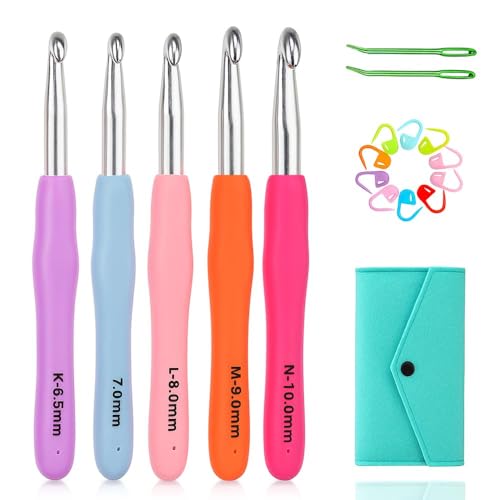

A chunky blanket feels heavy and hot when there is too much yarn packed into too little space. Most of the fixes happen before you make the first stitch. They come down to the yarn's weight for its thickness, the fiber, how dense your stitches are, and how big the blanket really needs to be.
This guide covers comfort in use: weight, warmth and drape on the body. Shedding, worming and price are left to other guides, and jumbo arm-knit blankets are outside its scope.
Why chunky blankets end up heavy and hot
Three things multiply together:
- How heavy the yarn is for its length. Two bulky yarns can look equally thick and still weigh very differently per metre.
- How tightly you work it. Dense stitches use more yarn in every square and leave fewer gaps for air and heat to move through.
- How much blanket there is. Every extra row adds weight across the whole width.
If you reduce any one of these, the finished blanket gets lighter. Reduce two and the difference is much easier to notice.
Read the label for grams per metre
Every ball band lists weight and length. Divide the grams by the metres (or yards) to get grams per metre. Then compare candidate yarns that sit in the same weight category. When two yarns work up at a similar gauge, the one with fewer grams per metre will usually make a lighter blanket.
Once you have a swatch, you can work out finished weight per square metre. Weigh the swatch, measure its area, and scale up to the size you plan. This is the most reliable way to know in advance whether the blanket will feel comfortable on your lap. Our yardage guide walks through similar skein math for smaller projects.
Steps before you buy the full amount
- Buy one skein of each yarn you are considering.
- Crochet a square at least 15 cm across with the hook and stitch you plan to use.
- Weigh it on a kitchen scale and measure it.
- Divide the weight by the area, then multiply by the area of your planned blanket.
- Drape the swatch over your forearm or knee to judge how stiff or fluid the fabric is.
Fiber and warmth
Choose the fiber based on how warm you tend to run and where the blanket will live. The comparison below shows general tendencies only. Specific yarns vary, so check the label and your swatch.
| Fiber type | General warmth tendency | Worth considering if | Watch for |
|---|---|---|---|
| Polyester chenille / plush | Feels soft and warm against the skin and breathes less than natural fibers | You want a plush feel for short sofa sessions | Can feel heavy in dense stitches, and it can trap heat |
| Acrylic bulky | Moderate | You want easy care and a wide color range | Breathes less than wool |
| Wool or wool blend | Warm while handling moisture better than synthetics | You get cold easily but dislike feeling clammy | Washing needs, and some people find it scratchy |
| Cotton or cotton blend | Cooler | You run hot or live somewhere warm | Heavy for its bulk, and it can stretch and lose shape at large sizes |
Cotton highlights the tradeoff. It can be the coolest option and also the heaviest, so pair it with an open stitch and a smaller finished size. If you care about how fabric feels against the skin, our guide to yarn people want on their skin goes deeper into fiber choice.
Stitch density: the biggest lever you control
Tight, short stitches such as single crochet in a bulky yarn make thick, stiff fabric that holds heat. Taller and more open stitches spread the same yarn over more area.
- Go up a hook size from the label's suggestion and compare swatches. Pick the loosest fabric that still holds its shape.
- Use taller or open stitches. Double crochet, V-stitch, granny-style clusters and mesh patterns let air through and drape more easily.
- Be careful with heavy textures. Bobbles, puffs, popcorns and dense cables stack extra yarn into each square. Use them as accents or borders instead of all over.
- Check drape on a curve. A swatch that stands stiffly will probably slide off a lap instead of settling over it.
If your fabric keeps coming out board-like, the same causes are covered in why crochet tops feel stiff.
Size the blanket to its real use
Many heavy blankets are simply bigger than their job requires. Decide where the blanket will spend most of its time:
- Lap throw: covers one person sitting, from lap to feet. This is the most forgiving size for heavy or warm yarns.
- Sofa throw: long enough to pull over shoulders or share. Here grams per metre and stitch choice start to matter a lot.
- Bed blanket or topper: the largest area by far. Choose your lightest yarn and most open stitch, or treat the blanket as a foot-of-bed layer rather than full coverage.
Measure the sofa or bed and the person using it instead of copying a pattern's dimensions. Your swatch math will tell you the finished weight at each size, so you can choose a size before you buy all the yarn.
Finishing choices that affect comfort
Wide, dense borders add weight right at the edges, which is where a blanket drags and slides. A narrow border in the main stitch keeps the edges in line with the body. Joining many separately made squares with heavy seams can also add stiff ridges, so choose a flat join if you go that route.