


Crocheting while lying back is mostly about two problems. Your arms have nothing to rest on, so they tire quickly. And everything you put down, from your hook to your stitch markers, tends to slide into the bedding and disappear. If you solve those two things, you can make a few relaxed rows even on a day when sitting at a table feels like too much.
This guide covers bed and reclined positions only. If you are choosing a chair, see Armchair, Recliner, or Glider: Comfortable Seating for Crocheters. Nothing here is medical advice. If your doctor or therapist has told you how to position yourself, follow their guidance first.
Start with your back: partly upright, not flat
Crocheting flat on your back means holding your hands up in the air, and that is tiring. Crocheting slumped forward means bending your neck down toward your lap. A middle position usually works better: your back supported and tilted back a little, with your head resting rather than held.
- Build a firm backrest. A backrest pillow with arms, sometimes called a reading pillow or bed rest pillow, holds you at a steady angle. Stacked bed pillows work too, but they tend to slide down as you move, so put the firmest one at the bottom.
- Support your head. A small pillow or rolled towel behind your neck lets your head rest instead of drooping forward to watch your hook.
- Put a pillow under your knees. Bent knees help stop you sliding down the bed, so you will need to re-prop yourself less often.
- In a recliner, stop partway. Recline just enough to rest your back while you can still see your hands without tipping your chin onto your chest.
If your neck or shoulders already ache when you crochet, Why Crochet Hurts Your Neck and Shoulders (and What Helps) explains where that strain comes from.
Give your arms something to rest on
This is the step beginners most often skip. In an upright chair, armrests or a table carry some of the weight of your arms. In bed there is nothing there, so your shoulders do all the holding. After a few rows that can feel like you have been lifting something.
- Use the arms of a backrest pillow to rest your elbows while your hands work in front of your chest or lap.
- Lay a pillow across your lap so your forearms and the work can rest on it. A firm pillow stays put better than a soft one.
- Tuck a small cushion under each elbow if your backrest has no arms.
- Let your work rest on something. The fabric you have already made does not need to hang from your hands. Lay it on the lap pillow or on your tray.
A quick check: let your shoulders drop. If your hands fall away from the work, raise your support until you can relax and still reach the stitches.
Set up a tray or overbed table as your work surface
A firm, flat surface in front of you solves several problems at once. It gives you a place to set your hook down, keeps small items out of the sheets, and can hold a pattern or a drink.
| Option | What it does well | What to watch for |
|---|---|---|
| Lap tray with legs | Sits over your lap in bed; folds away | Usually fixed height; check it clears your knees with a pillow underneath |
| Tray with a raised edge | The rim stops a hook or markers from rolling off | Smaller trays fill up quickly |
| Overbed table on wheels | Rolls over the bed or a recliner; often adjustable in height | Needs floor space beside the bed |
| Firm lap cushion or desk | Light and easy to move | Less stable on soft bedding |
Whatever you choose, the surface should sit close enough that you can put the hook down without leaning forward. If you reach for it a lot, move it closer.
Keep yarn and tools from vanishing into the bedding
In bed, a dropped stitch marker or a ball of yarn rolling off the edge is more than annoying when you do not have the energy to dig through the covers for it. Set things up so nothing needs rescuing.
- Put the yarn in a container. A yarn bowl has a slot that feeds the strand to you while the ball stays put. On soft bedding, set it on your tray, not on the duvet, where it can tip over. A zippered project bag with a small opening also works and will not spill if it falls.
- Keep small things in one lidded box. Stitch markers (small clips you hook into a stitch to mark your place), scissors and a tapestry needle (a large-eyed blunt needle for sewing in yarn ends) can all live in a small case on your tray.
- Choose a hook that is easy to find. A bright or chunky-handled hook is easier to spot in pale sheets than a slim metal one. Ergonomic crochet hooks with thick handles are also easier to hold when your grip is weak; see Crochet Longer Without the Ache: Hooks That Fight Fatigue for more on handles.
- Mark your place before you stop. Clip a marker into the last loop on your hook, called the working loop. Then your stitches cannot unravel if you fall asleep or put the work down in a hurry.
Get light onto your hands, not your face
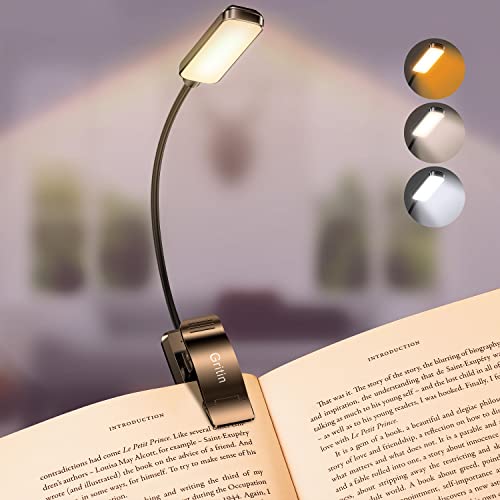
Ceiling lights tend to sit behind or above you when you are lying back, which puts your own shadow on your work. A light clipped to the headboard or the edge of your tray, angled down at your hands, avoids that. Point it at the work and away from your eyes so you are not looking into the glare. A clip-on reading light is one easy option. For more on placement, read Position Your Craft Light Right: Longer Evening Crochet.
Choose a small, forgiving project
The right project matters as much as the setup. A large blanket gets heavier as it grows and spreads out over the bed. For low-energy days, look for work that is:
- Small and light, such as granny squares, washcloths, coasters or a scarf worked in a lightweight yarn.
- Repetitive, so you are not counting complicated stitches or reading a long pattern.
- Easy to see, in a lighter yarn color where the stitches stand out.
- Easy to stop. Squares are good because each one is finished in a sitting, and you can join them on a better day.
If you are a beginner, a plain square of single crochet (the shortest basic stitch) is a fine choice. Mistakes in a practice square do not matter, which takes the pressure off.
Keep sessions short and plan your stops
Decide on a short stopping point before you start, like the end of a row or a round, and put the work down there even if you feel fine. Between rows, let your hands rest open on the pillow and roll your shoulders. When you finish, close up the yarn container and put the box of tools on the bedside table, so the next session starts without any searching.
The Bateman Horne Center has published practical comfort advice from a community member who spends long periods in bed, if you want more ideas for making a bed-based day easier.