


A crocheter with sore hands needs gifts chosen for comfort, and where their hands hurt tells you what that means. Someone whose thumb aches from pinching a thin hook needs something different from someone whose wrists get tired holding up a growing blanket. This guide groups gifts by that question first, then covers the checks that keep a thoughtful gift from going unused.
This guide describes features, fit and who each type of item tends to suit. Their own doctor or hand therapist is the right person to ask about their condition. A gift can make crocheting easier to set up and hold. It cannot stand in for that advice.
Before you buy: four quiet checks
A little detective work saves you from buying a duplicate or the wrong size.
- Find out which hook sizes they use most. Look in their hook case or at the yarn labels in their stash. Someone who mostly makes blankets in worsted yarn uses different sizes from someone who makes small amigurumi. A single hook in the right size is more useful than a full set in sizes they never touch.
- Notice what they already hold. If they own some ergonomic hooks, check whether they reach for them or for older plain ones. That tells you whether a handle style suits them.
- Ask where it bothers them, casually. "Is it your thumb, your fingers or your wrist that gets tired?" is an ordinary question and points straight to a gift category below.
- Keep the gift receipt. Comfort is personal. A handle that suits one person can feel wrong to another, and gloves that miss on size are no help. Make exchanges easy and say so.
If the thumb and fingers ache: ergonomic hooks by grip shape
This is the most common gift for this person, and the choice comes down to handle shape and width. A plain aluminum hook is thin, so the hand has to pinch tightly to control it. Ergonomic hooks add a wider handle so the grip can relax.
Handle styles to know about:
- Soft rubber or silicone handles. A cushioned grip over a metal hook. These are a common entry point and are widely sold in sets, such as soft grip ergonomic crochet hook sets.
- Thick rounded or contoured handles. Wider, shaped grips meant for a fuller hand hold. These can suit people who hold the hook like a knife, with the hand over the top.
- Flat thumb rests. A flattened area where the thumb sits. People who hold the hook like a pencil often look for this.
- Lightweight handles. Some ergonomic hooks are bulky but heavy. For hands that tire, weight matters as much as width.
If you are unsure which shape suits them, buying a single hook in their most used size is a low-risk way to test a style before committing to a set. For a closer look at handle shape and width, see which hook handle suits painful hands, and for picks matched to hand pain, see best ergonomic crochet hooks for arthritis and hand pain.
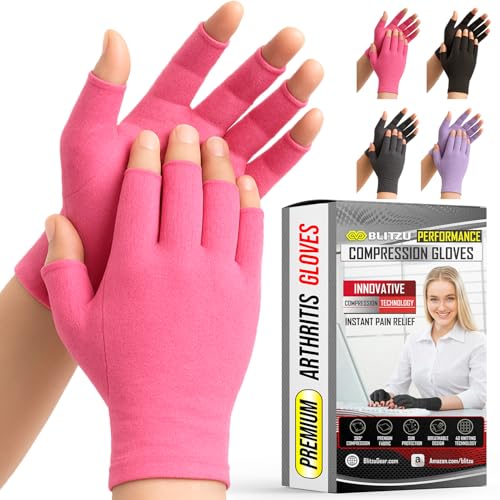
If the hands swell or feel stiff: compression gloves sized correctly
Fingerless compression gloves are popular with crafters because the fingertips stay free to feel the yarn. The catch is size. Gloves that are too loose do little, and gloves that are too tight are uncomfortable to wear for long.
- Check the seller's sizing chart. Most ask for a hand measurement, often around the palm.
- If you cannot measure without spoiling the surprise, compare against a pair of gloves they already wear, or give the gloves with the receipt and an open offer to swap sizes.
- Open-finger styles leave fingertips free for handling yarn. Some styles also extend over the wrist.
Search for fingerless compression gloves for crafting and read the size chart before ordering. Our guide to compression gloves and wrist supports for crocheters goes into fit in more detail.
If the wrists and arms tire: gifts that carry the weight
Not all strain comes from the hook. A large blanket in progress rests in the lap and pulls on the wrists and forearms, and a skein that rolls away means constant reaching and tugging.
- A lap desk or cushioned lap tray. Raises the work so the arms are not holding it up, and gives the project somewhere to rest.
- A yarn bowl. Holds the ball in place and feeds the yarn through a slot, so the crocheter is not pulling against a ball that bounces or rolls. Look for a stable, weighted base. A wooden yarn bowl is a common choice, and ceramic ones exist too. A ceramic bowl can break if dropped, so wood may suit a household with pets or children.
If they work on big blankets, how to crochet a heavy blanket without your shoulders and wrists carrying the weight has more on setting up support.
Yarn that is easier on working hands
Yarn is a riskier gift because crocheters have strong preferences, but a few features matter for tired hands:
- Smooth, plied yarn is generally easier to work than yarn that splits, which makes the hook catch and forces extra effort.
- Some stretch can be easier to work than a stiff fiber that resists the hook.
- Weight of the finished piece. A blanket kit in very heavy yarn means a lot of weight in the lap by the end.
If you give yarn, ask what they enjoy working with, or choose a fiber and weight they already use. A gift card to a yarn shop is a reasonable fallback.
Matching the gift to the complaint
| Where it bothers them | Gift type to consider | What to check |
|---|---|---|
| Thumb or pinching fingers | Ergonomic hook with a wide or thumb-rest handle | Their most used sizes; how they hold the hook |
| General tiredness in the hand | Lightweight ergonomic hook, smooth yarn | Hook weight as well as width |
| Stiff or swollen-feeling hands | Fingerless compression gloves | Hand measurement against the size chart |
| Wrists and forearms | Lap desk or tray, yarn bowl | Stable base; size of their usual projects |
| Not sure | Single ergonomic hook in their main size, plus receipt | Easy exchange |
What to avoid giving
- Thin-handled novelty hook sets. Decorative or bargain sets with slim handles ask the hand to grip tightly, which is the opposite of what this person needs. Large numbers of sizes also do not help if most go unused.
- Heavy bulky blanket kits. They look generous, but the finished weight sits on the lap and wrists for the whole project.
- One-size gloves bought blind. Fit matters too much to guess without a receipt.
- Anything presented as a cure. Frame the gift as something to make crocheting more comfortable to set up, not as a fix for their hands.
If the hands are fine but neck and shoulders are the issue, that is a different set of solutions, covered in why crochet hurts your neck and shoulders.