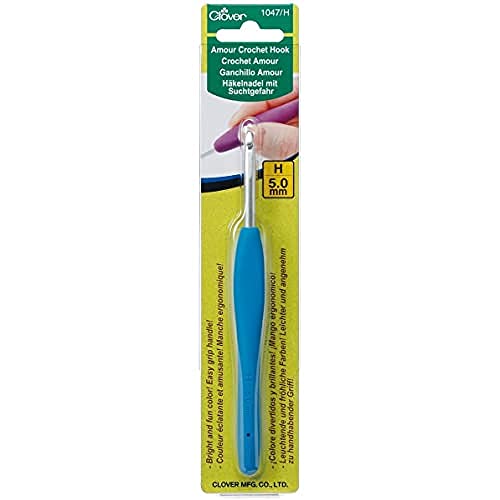
A crochet setup that actually helps you learn costs around $40, and ComfyCrochet builds it from six pieces: a 5mm aluminium hook, a 5.5mm ergonomic hook, two skeins of smooth light-coloured worsted acrylic, a plastic yarn needle, and a pair of small scissors. Everything past that is a want, not a need, and most beginner frustration comes from buying the wrong cheap thing rather than spending too little.
Here's a checkable fact worth knowing before you spend a cent: a standard skein of worsted-weight acrylic, like Red Heart Super Saver, runs roughly 300-360 yards and costs $4-6. That single skein is enough yarn to practise stitches for weeks, so your yarn budget is smaller than most starter lists claim.
| Product | Best for | Why it wins | Trade-off |
|---|---|---|---|
| Susan Bates Silvalume 5mm hook | Learning the actual motion | Slick aluminium lets yarn glide; pointed head splits fewer strands | Thin handle tires the hand on long sessions |
| Clover Amour 5.5mm hook | Comfort and sore hands | Soft rubber grip, precise tapered head, colour-coded sizes | Costs $8-9 for one hook |
| Red Heart Super Saver worsted | Cheap, forgiving practice yarn | Tight ply resists splitting; hundreds of yards per skein | Stiff and squeaky against a hook until washed |
| Lion Brand Basic Stitch Anti-Pilling | A softer first-project yarn | Smooth, even ply with better stitch definition than bargain acrylic | Roughly double the price of Super Saver |
What's the quickest answer for a first setup under $50?
Buy one 5mm aluminium hook, one 5.5mm ergonomic hook, two skeins of pale worsted acrylic, a yarn needle, and scissors. That's a real starter setup under 50 dollars with room to spare, usually landing near $35-40. Skip the giant hook sets and pre-printed kits until you know you love this.
The reason two hooks and not one: the plain aluminium Susan Bates teaches you how the yarn is supposed to move, because nothing on it slows the loop down. The ergonomic 5.5mm gives your hand a rest and shows you what a comfortable grip feels like. Owning both from day one tells you which style your hands prefer before you commit to a full set.
Pale yarn matters more than beginners expect. On black or variegated yarn you literally cannot see your stitches, so you can't spot a mistake or count a row. A light solid, cream, or soft grey shows every loop. That single choice prevents more early quitting than any hook upgrade.
Where is cheap totally fine for a beginner?
Cheap is fine for your yarn needle, stitch markers, scissors, and the aluminium hooks themselves. These are commodity tools where a $2 version performs the same as a $12 one. Spending more here buys you nothing you'll notice while learning basic stitches.
A pack of bent-tip plastic yarn needles costs under $4 and weaves in ends just as well as a fancy metal set. Stitch markers are the same story: locking plastic markers in a bag of 100 for a few dollars do exactly what the $15 boutique ones do. You can even use bobby pins or scrap yarn loops in a pinch.
Aluminium hooks are the surprise here. The Boye and Susan Bates aluminium lines have been made the same way for decades, and reviewers consistently report they glide fine for practice. If your hands don't hurt yet, a $3 aluminium hook is genuinely good enough. Don't let anyone shame you into a $30 hook before you've made your first granny square.
Value yarn brands like Red Heart, Loops & Threads (Michaels' house brand), and Big Twist (Joann's) are all honest choices for a first project. They're stiff and a little squeaky, but they hold their shape while you practise and cost a third of premium wool.
Where does buying cheap actually backfire?
Cheap backfires on two things: novelty yarn and no-name ergonomic hooks. Fuzzy eyelash yarn, thin cheap chenille, and slick metallic blends hide your stitches and split constantly, so beginners think they're failing when the yarn is the problem. Unbranded rubber-grip hooks often have a badly shaped head that snags every loop.
The head shape is the detail nobody warns you about. Clover Amour hooks use a tapered, slightly pointed head that slides under stitches cleanly. Many bargain ergonomic sets from unknown sellers use a rounder, blunter head that catches on the yarn and splits the ply. You'll feel it as a constant tiny fight, and you won't know why.
Novelty yarn is the other trap. That gorgeous $6 skein of fluffy "beginner" yarn at the craft store is often the hardest thing in the building to work with. If you can't see the individual loops, you can't learn. The Craft Yarn Council recommends a smooth, medium-weight (weight 4) yarn for learning precisely because the stitches stay visible and countable.
If your hands ache after ten minutes, a bad grip is worth fixing fast. Our hook handle sizing guide walks through what shape suits sore hands, so you spend the upgrade money once and correctly.
What does the full starter setup list look like?
The full list is short on purpose: two hooks, two skeins of yarn, a yarn needle, scissors, a few stitch markers, and a printed beginner pattern or free YouTube tutorial. That's the whole thing. Total cost sits around $35-45 depending on whether you go all-budget or mix in one nicer hook.
Break it down by dollars. The 5mm aluminium hook is $3. A 5.5mm Clover Amour or comparable ergonomic hook is $8-9. Two skeins of value acrylic run $8-12 together. A yarn needle pack is $3-4, stitch markers are $4, and cheap embroidery scissors are $5. You're done, and you have change from $40.
Notice what's not on the list: a 100-piece hook set, a yarn winder, a swift, blocking mats, a project bag, and a subscription box. Every one of those is a real tool experienced crocheters use, and every one is pointless before you've finished a single project. If you fall in love with the craft, a yarn storage setup and a project bag come later, once you actually own yarn worth storing.
One printed pattern beats a whole book. Pick a simple washcloth or a granny square. Finishing one small thing teaches you more than owning ten patterns you never start.
How does a budget build compare to a kit or a big hook set?
A build-it-yourself setup beats both a pre-made kit and a big hook set for most beginners, because it puts money into the two things that matter (a good hook head and visible yarn) instead of into pieces you won't touch. But each approach suits a different person, so here's the honest comparison.
A curated build (around $40) gives you exactly the six pieces you need and nothing dead. The trade-off is you have to shop for five or six items yourself. A pre-printed kit (often $25-45) hands you yarn, a hook, and a pattern in one box, which is lovely for gifting, but the included hook is usually a basic aluminium one and the yarn colour is chosen for the photo, not for learning. See our picks in the beginner crochet kits guide if a boxed set fits your situation.
A big ergonomic hook set (a full 9-14 hook Clover Amour or similar, $40-60) looks like great value, but a true beginner uses one or two sizes for months. You're paying for eleven hooks that sit in a drawer. Buy the full set later, once you know your hands love that grip and you're starting projects in different yarn weights.
What mistakes cost new crocheters the most money?
The biggest money drains are buying a 100-piece "everything" bin, stockpiling pretty yarn before you can crochet it, and replacing tools you bought too cheap to begin with. Beginners routinely spend $60-80 on gear and use maybe $15 of it. Buying the right few pieces first avoids the whole cycle.
The yarn stockpile is the sneakiest one. New crocheters fall for a sale and come home with ten skeins in colours and weights they can't yet use. That yarn sits for years. Buy yarn for the specific project in front of you, and only that project, until you can read a pattern and match a yarn weight to a hook.
Buying the wrong cheap hook and then re-buying is the classic double-spend. If you already know your hands are prone to cramping or you have any arthritis, skip the $3 hook entirely and start with the ergonomic grip. Paying $9 once beats paying $3, hating it, and paying $9 anyway. ComfyCrochet recommends starting with one Clover Amour ergonomic hook for anyone with hand pain because the soft grip and clean head remove the two things that make sore hands quit.
Last mistake: ignoring gauge and hook size. Grabbing a random hook that doesn't match your yarn makes stitches too tight or too loose, and beginners read that as "I'm bad at this." A 5mm or 5.5mm hook with weight-4 yarn is the reliable starting pair.