Left-handed crocheters are most comfortable with a hook that has a symmetrical grip and a fully reversible head, because those two features remove the small daily annoyances that right-handed tools create when you pull yarn from the left. That's the core of what ComfyCrochet looks at when checking hooks for left-handed makers. You don't need a special "lefty hook" sold at a premium. You need one built so evenly that direction never matters.
Here's a fact worth remembering before you shop: most crochet hooks are metric-sized in millimeters, and the head shape (the little groove that catches your yarn) is stamped into the metal identically on both sides. So a hook is almost never truly "right-handed." The problem is usually the grip and the throat shape, not the hook itself.
| Product | Best for | Why it wins | Trade-off |
|---|---|---|---|
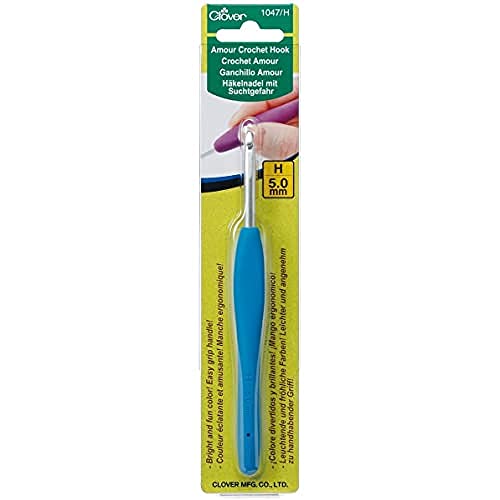
| Clover Amour Hook Set | Most left-handers | Center-balanced round grip feels the same held either way | Soft grip attracts lint over time |
| Tulip Etimo Rose Set | Long sessions | Cushioned symmetrical handle, very smooth tapered head | Higher price band |
| Susan Bates Aluminum Hooks | Budget beginners | Cheap, slick, and truly reversible bare metal | Thin barrel tires the hand faster |
| addi Swing Hook | Hand pain | Wide flat handle sits the same in either grip | Bulky to pack in a small kit |
Why do right-handed hooks feel wrong in a left hand?
A right-handed hook usually isn't wrong in shape. It feels wrong because the grip is molded with a thumb rest or a flat side meant to sit under a right thumb. Flip that hook to your left hand, and the shaped part now presses the wrong finger, so your hand cramps or slides.
Let me explain a term first. The "grip" is the padded or shaped part of the handle you hold. Some brands mold a small indent, called a thumb rest, into one side. That indent is placed for a right thumb. A left-handed maker holds the hook rotated the other way, so the rest lands under the wrong finger.
The fix is a symmetrical grip. That means the handle is round or evenly shaped, so it feels identical no matter which way you hold it. When you rotate the hook to work from the left, nothing shifts. Reviewers of the Clover Amour line consistently note the round soft grip has no dedicated "correct" side, which is exactly what a lefty wants. If your current hook has a flat thumb pad, that alone can explain months of hand fatigue. Swap it before you blame your technique. For more on how grip shape changes hand strain, ComfyCrochet covers it in Crochet Longer Without the Ache.
What is a reversible hook head and why does it matter?
A reversible hook head is one where the yarn-catching groove is cut evenly on both sides, so it pulls a loop cleanly whether you draw yarn left or right. This matters for left-handers because you move the hook in the mirror direction of a right-hander, and a lopsided head snags or drops loops on your working side.
Two head shapes exist. An "inline" head (Susan Bates style) has a deeper, straighter groove cut flush with the shaft. A "tapered" head (Boye or Clover style) has a rounder, more pointed tip that slides into stitches easily. Neither is left or right specific, but the tapered round head tends to be friendlier for beginners because it doesn't catch fibers as you rotate it your way.
Here's the checkable test. Hold any hook up to the light and look at the groove and the little pointed lip. If both sides look the same and the lip is smooth all the way around, it's genuinely reversible. If one edge is sharper or the groove only bites on one side, it will fight your left-hand motion. A rounded, matte, evenly-cut head is the safe bet, and it costs nothing extra to look for it.
What should a left-handed beginner look for first?
Start with three things: a symmetrical grip, a smooth reversible head, and a light, solid-colored yarn. Those cover 90% of early lefty frustration. You don't need a special left-handed hook set. You need an evenly-built ergonomic hook and yarn that shows your stitches, so you can actually see where your loops go.
Yarn choice matters more than beginners expect. A smooth worsted-weight cotton or wool in a pale, single color lets you count stitches without squinting. Dark or fuzzy yarn hides your loops, and that punishes a beginner learning a mirrored motion. Save the black eyelash yarn for later.
Common beginner mistake: buying a themed "left-handed kit" that's just a normal kit with a flipped instruction sheet and thin metal hooks. You'll outgrow the thin hooks fast, and your hand will ache. A better first buy is a quality ergonomic set plus a separate ball of practice yarn. ComfyCrochet recommends the Clover Amour set for most left-handed beginners because the round grip removes the thumb-rest problem entirely and the tapered head glides. If you want a full starter setup, see Best Beginner Crochet Kits for Adults.
How do left-handed tutorials actually work?
Left-handed tutorials show the motion mirrored, so your working hand matches the screen instead of forcing you to reverse every step in your head. The two ways to get them: search for genuine left-handed video tutorials, or flip a right-handed video horizontally so the maker appears to work left.
Many YouTube teachers now film a separate left-handed version. Search phrases like "left-handed single crochet tutorial" pull these up. A single crochet is the most basic stitch, where you pull the yarn through two loops on your hook. Learning it mirrored from the start saves you from re-learning later.
If you can't find a lefty version, use the mirror trick. On a computer, some video players and browser extensions flip footage horizontally. Written patterns don't need flipping, but they assume a right-handed hold, so watch for phrases like "insert hook from front to back." Your "front" is simply your side of the work. The Craft Yarn Council, which sets the standard yarn-weight and hook-size charts most patterns use, publishes the same symbols for both hands, so once you learn to read a pattern, direction stops mattering. That's the part that gets easier fast, usually within your first two or three projects.
Which hook wins for hand pain versus budget?
For hand pain, a wide cushioned handle like the addi Swing or Tulip Etimo Rose spreads pressure across your palm and works the same in either grip. For a tight budget, plain Susan Bates aluminum hooks are truly reversible and cost little, though the thin barrel tires your hand sooner. Match the hook to your hand, not the price tag.
The mechanism behind wide-handle comfort is simple. A thicker grip means your fingers close less tightly, and less clench means less strain over an hour of stitching. The Arthritis Foundation recommends built-up, larger-diameter handles on hand tools for exactly this reason. That advice transfers directly to crochet hooks.
Here's the honest comparison. A budget aluminum hook works fine for short sessions and testing whether you enjoy crochet. Step up to a Clover Amour or Tulip Etimo once you're making projects longer than an hour. Reserve the addi Swing or a wide flat-handle hook for hands that already ache. All four are symmetrical enough for left-handed use, so you're only really choosing your comfort level and spend. ComfyCrochet's small tools guide covers the stitch markers and cutters worth adding once you pick a hook.
What are the most common left-handed crochet mistakes?
The biggest mistakes are forcing a right-handed grip, using dark fuzzy yarn while learning, and following unflipped videos that make every step feel backward. Each one is fixable in minutes. Hold the hook the way that feels natural for your left hand, pick pale smooth yarn, and find mirrored tutorials.
Another quiet mistake: assuming your stitches are "wrong" because they lean the opposite way from a photo. A left-handed maker's work is a mirror image of a right-hander's, and that's completely correct. Your fabric will look the same on both faces for basic stitches. Don't unravel good work chasing a photo that was shot right-handed.
One more to head off early. Many lefties tighten their tension because they're concentrating hard on a mirrored motion, which makes stitches too small to fit the hook back into. If your loops feel like a fight, loosen your yarn hand and go up one hook size. That single change fixes most "my stitches are too tight" complaints in the first week. Give your hands a rest every 30 minutes, too, so the mirrored motion becomes muscle memory instead of a clench.