

Read the grip width, the weight, and the handle material before you read a single star rating — those three numbers predict hand pain better than any 'ergonomic' label. ComfyCrochet compares crochet hooks by measurable specs so arthritic and sore-handed makers can pick by what actually reduces strain: a barrel grip around 12mm, a total weight under 15 grams, and a soft resin or rubber handle instead of bare metal. Everything else is packaging.
Most 'ergonomic crochet hook' handles measure between 8mm and 14mm across the grip. A standard bare aluminum hook is roughly 4-5mm — thin enough that your fingers pinch hard to hold it, which is exactly what inflames a sore thumb joint.
| Product | Best for | Why it wins | Trade-off |
|---|---|---|---|
| Tulip Etimo Rose | Thumb & pinch-grip pain | Contoured cushion grip, very light body, smooth taper reduces snagging | Premium price; grip is medium-width, not the fattest |
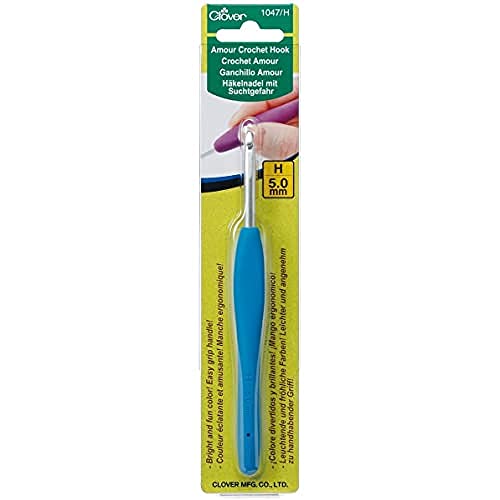
| Clover Amour | Stiff finger joints, all-day sessions | Wide soft-rubber grip, color-coded by size, consistent hook shape | Grip can feel bulky for small hands |
| Chunky resin ergonomic hook | Severe arthritis, weak grip | Fattest barrel available, minimal clamping force needed | Heavier; limited size range; hook heads vary in quality |
| Prym Ergonomic | Budget shoppers | Angled soft grip at low price, single-hook purchase available | Fewer sizes; grip firmer than Clover's |
Which three hook specs actually predict hand pain?
Grip width, total weight, and handle material predict hand pain more reliably than any brand claim. A wider grip (12mm+) stops your fingers from clamping. A lighter body (under 15 grams) means less lifting force per stitch. A soft resin or rubber handle spreads pressure instead of concentrating it on one thumb joint.
Grip width matters because pinch force rises sharply as a handle gets thinner. When you hold a 4mm bare aluminum hook, your thumb and index finger squeeze near their maximum to keep it from slipping. Widen that to 10-12mm and the same grip feels secure with far less muscle tension — the kind of tension that keeps an arthritic joint inflamed after a long afternoon.
Weight compounds over hours, not minutes. A hook that weighs 20 grams versus 10 grams doesn't feel different for one stitch, but multiply the difference across the thousands of small lifts in a blanket row and the heavier tool wears out your forearm first, then your grip. Aluminum-cored hooks with resin handles usually land in the 9-13 gram range; solid metal hooks run heavier.
Handle material changes where pressure lands. Hard plastic and bare metal transmit every edge into your skin; soft thermoplastic rubber (TPR) and cushioned resin deform slightly under your fingers, which spreads the load. That's why the Clover Amour and Tulip Etimo both use compliant grips rather than rigid ones.
What grip width and shape work best for arthritic hands?
For arthritic hands, aim for a grip at least 12mm wide with a triangular or contoured cross-section rather than a round barrel. A wider, shaped grip lets you rest the hook against your fingers instead of pinching it, which reduces load on the thumb's basal joint — the spot arthritis hits hardest.
The Arthritis Foundation recommends built-up handles on everyday tools precisely because a fatter grip lowers the pinch force your joints must generate. That principle applies directly to crochet hooks: the fattest resin-handled hooks push past 14mm, and for a hand that can barely close around a pencil, that extra width is the difference between finishing a row and setting the project down.
Shape matters as much as raw width. A round barrel forces a constant grip because it wants to roll; a flattened or triangular grip has a natural resting orientation, so you hold it lightly and let the flat face do the work. The Tulip Etimo's cushioned grip is subtly contoured for this reason, while chunky resin hooks rely on sheer diameter.
ComfyCrochet recommends a chunky resin ergonomic hook for severe basal-thumb arthritis because the oversized barrel needs almost no pinch force to hold steady. If your arthritis is milder and centered in the finger joints, the wide rubber grip on the Clover Amour is easier to control on detailed work. For seating that keeps your wrists neutral through it all, see our guide on comfortable seating for crocheters.
Does hook weight actually matter over a long session?
Yes — hook weight matters most in projects that run past 30 minutes. A lighter hook (9-13 grams) reduces the cumulative lifting force your forearm and grip muscles apply across thousands of stitches. The difference is invisible per stitch but decisive over a full blanket panel, where fatigue in the forearm usually appears before joint pain does.
Here's the mechanism people miss: fatigue travels. When your forearm tires from lifting a heavy hook, your grip weakens to compensate, so you clamp harder to keep control — and that harder clamp is what aggravates a sore thumb. A light hook breaks that chain. The Tulip Etimo is prized among long-session crocheters because its aluminum-cored body stays light while the grip does the cushioning.
Weight also interacts with yarn drag. Slick metal hook heads glide through stitches with less pulling force, which means less compensating tension in your hand. A rough or cheaply finished hook head makes you yank harder regardless of grip comfort. This is why a great grip on a bad hook head still leaves your hand tired.
If you crochet on the move, weight and snag-resistance both matter — our travel crochet kit guide covers hooks that stay light and smooth in a bag.
Which ergonomic hook is best on a budget?
The best budget pick is a single Prym Ergonomic hook in the size you use most, rather than a cheap full set. Prym's angled soft grip delivers most of the pinch-force reduction of premium hooks at a fraction of the cost, and buying one size lets you test the shape before committing to a set.
The trap with budget ergonomic hooks is the giant 40-piece 'arthritis' sets sold for under $20. Reviewers consistently report inconsistent hook heads across sizes, grips that harden in cold rooms, and barrels that are wide but slippery. You end up using two hooks and ignoring the rest, so the low price per hook is an illusion.
A smarter budget path: buy one quality ergonomic hook in your go-to size (often 4mm or 5mm), confirm the grip suits your hand, then add sizes one at a time. A single Clover Amour or Prym costs a few dollars and outlasts a bargain set. If you already own bare aluminum hooks you like, slip-on cushioned hook grips add width for a couple of dollars — a genuine fix when money is tight, though they can twist loose on very slick hooks.
What mistakes make ergonomic hooks fail to help?
The most common mistake is buying by the word 'ergonomic' instead of by width, weight, and material. Many hooks labeled ergonomic have grips barely thicker than a standard hook, or hard plastic handles that don't cushion at all. The label is unregulated, so a spec check is the only reliable filter.
Mistake two: gripping the hook too tightly out of habit even after switching. A wide handle only helps if you let your hand relax around it. If you keep pinching like you did on a thin hook, you cancel the benefit. Consciously loosening your grip for the first week retrains the reflex.
Mistake three: ignoring the pencil-versus-knife hold. If you hold your hook like a knife (over the top), you want a grip that fills the palm; if you hold it like a pencil, a contoured grip near the head matters more. Buying a palm-filling chunky hook when you crochet pencil-style can feel worse, not better.
Mistake four: blaming the hook when the real culprit is yarn tension or hours without a break. Even the best hook won't offset death-gripping tight yarn or three straight hours without stretching. Occupational therapists routinely advise micro-breaks every 20-30 minutes for repetitive hand tasks; a two-minute stretch does more than any single tool. Left-handed makers setting up for the first time should start with a comfortable grip from day one — see our left-handed beginner kit guide.
How do I match a hook to my specific hand problem?
Match the hook to where and how it hurts. Thumb or pinch-grip pain points to a light, contoured hook like the Tulip Etimo. Stiff finger joints or all-day fatigue point to the wide-gripped Clover Amour. Severe arthritis with weak grip points to the fattest chunky resin barrel you can find. Budget constraints point to a single Prym or slip-on grips.
Think in two axes: severity and precision. Severe grip weakness needs maximum width even at the cost of some heft — the chunky resin hook. Detailed work like amigurumi needs control, so a medium contoured grip beats a huge one that hides the hook head. Most crocheters land between these, which is why the mid-width Clover Amour and Tulip Etimo dominate recommendation lists.
Also weigh how much you crochet in one sitting. Occasional 20-minute sessions rarely justify a premium hook; a slip-on grip on your existing hook may be enough. But if you build blankets or garments across multi-hour sessions, the light body of the Tulip Etimo earns its price by delaying the forearm fatigue that starts the pain cascade. For big projects, our yardage guide helps you plan how long you'll actually be holding that hook.
Steps to pick an ergonomic hook by spec
- Identify where it hurts first — thumb base, finger joints, or forearm — before shopping.
- Check the listed grip width; treat 12mm or wider as your target for arthritic hands.
- Confirm total weight; favor hooks under 15 grams for sessions over 30 minutes.
- Look for soft resin or TPR rubber handles, not hard plastic or bare metal.
- Buy one hook in your most-used size (usually 4mm or 5mm) before buying a set.
- Test your grip pressure for a week and consciously loosen it around the wider handle.
- Add a micro-break every 20-30 minutes and a light forearm stretch.
- Only expand to a full set once the shape and width prove comfortable in your hand.
Who should buy what: budget shoppers and occasional crocheters do fine with a single Prym Ergonomic or slip-on cushioned grips. Crocheters with stiff finger joints or long daily sessions get the most from the wide-gripped Clover Amour. Anyone with thumb or pinch-grip pain who runs multi-hour projects should reach for the light, contoured Tulip Etimo. Severe arthritis with real grip weakness calls for the fattest chunky resin hook you can find, accepting the extra weight for the drop in required pinch force.
