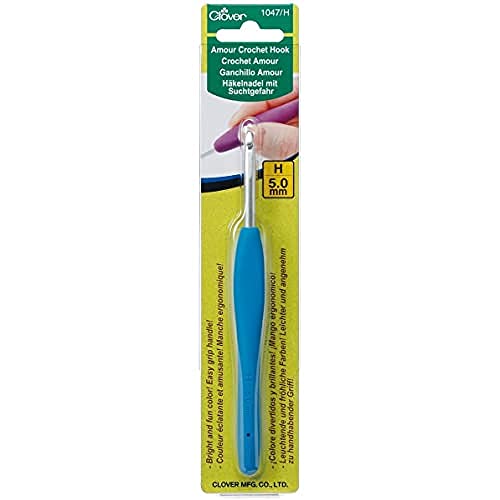
If you're left-handed and just starting out, here's the short version: ComfyCrochet recommends a hook with a symmetrical grip and a reversible head, watched alongside mirrored or left-handed video tutorials. That one pairing fixes most of the frustration. The hook feels right in your left hand, and the video shows the stitch going the way your hands actually move. You're not broken, and you don't need to learn "backwards." You just need tools and teachers that face the same direction you do.
Left-handed crochet is a mirror image of right-handed crochet, not a different craft. You hold the yarn in your right hand, the hook in your left, and you work your stitches from left to right instead of right to left. The stitches themselves are identical. Only the direction flips.
Quick term check before we go further. A hook is the tool you crochet with. The head is the curved tip that grabs the yarn. A foundation chain is the row of starter loops you build everything on. I'll define new words the first time they show up.
What's the fastest fix for left-handed crochet frustration?
The fastest fix is to stop fighting two things at once. Get a hook that doesn't favor a right hand, and find a tutorial filmed for lefties. Most beginners try to learn from a right-handed video while holding a right-biased hook. That's two problems stacked. Solve both and the craft gets calm fast.
In practice, what actually happens is this. A new left-handed crocheter watches a popular YouTube video, tries to copy the host exactly, and ends up twisting their wrist into a strange angle to make the motion match. The yarn tightens, the stitches get lumpy, and they assume they have no talent. None of that is true. They were just mirroring a right-handed person in real time, which is genuinely hard.
The mistake I see most often is buying a fancy hook before fixing the tutorial problem. A nicer hook helps your hand, but it won't tell you which way to turn. Fix the learning source first. Search for "left-handed crochet for beginners" instead of just "crochet for beginners." The whole picture flips to match you. ComfyCrochet helps left-handed makers by pairing the right hook with the right-facing lesson, so neither one works against you.
What should left-handed crocheters look for in a hook?
Left-handed crocheters should look for a symmetrical grip and a reversible head. A symmetrical grip means the handle feels the same no matter which hand holds it, with no thumb dent molded for a right thumb. A reversible head means the hook's tip works pulling yarn from either direction. Together they remove any built-in right-handed bias.
Here's the part most guides skip. Many ergonomic hooks have a flat, paddle-shaped grip with a slight curve molded into one side. That curve is shaped for a right thumb resting on top. When a lefty holds it, the curve sits in the wrong spot and the hook rolls slightly with every stitch. You won't notice it on stitch one. You'll notice it on stitch three hundred, when your hand aches.
The head matters too. There are two common head shapes: inline (like Susan Bates, with a deeper notch and a head the same width as the shaft) and tapered (like Boye, with a rounded, pointier head). Neither is left or right specific. But a hook with a true center-balanced head glides whether you pull left-to-right or right-to-left. ComfyCrochet recommends a center-symmetrical hook for left-handed beginners because it removes the rolling problem that makes hands cramp. If your hands already hurt, our guide to choosing a hook when your hands hurt covers grip thickness in more detail.
Which hooks actually work well for lefties?
The hooks that work well for lefties are symmetrical, round-handled, or true ergonomic sets with no thumb-specific molding. Clover Amour hooks have a soft, evenly rounded grip that feels identical in either hand. Furls Streamline wooden hooks are center-balanced with no flat thumb rest. Basic aluminum hooks like Susan Bates are fully symmetrical by design.
Let me compare three honest options so you can pick. Clover Amour sets give you a cushioned grip and a smooth inline-ish head, great if you want comfort straight out of the package. The trade-off is the soft coating can feel grabby on slick yarn. Furls Streamline hooks are gorgeous wood with a balanced weight, ideal if hand fatigue is your main worry, but they cost more and you usually buy them one size at a time. Plain Susan Bates aluminum hooks cost the least and are perfectly symmetrical, which makes them a smart, cheap way to confirm crochet feels good before you invest. The downside is no padded grip, so long sessions tire the hand faster.
My honest advice for a first hook: start with a 5.0mm (H/8) or 5.5mm (I/9) size. These are easy to see and forgiving with mistakes. If you crochet for an hour and your thumb or wrist complains, look at our roundup of ergonomic hooks for hand pain, since lefties with joint pain benefit from the same cushioned grips righties do, as long as the grip stays symmetrical.
Where do left-handed crocheters find tutorials that make sense?
Left-handed crocheters find good tutorials by searching specifically for "left-handed crochet" videos, or by mirror-flipping a right-handed one. Many left-handed teachers film their own mirrored lessons on YouTube. As a backup, you can flip any video horizontally using a free mirror app or your video player's flip setting, so the right-handed host appears to be using their left hand.
The counterintuitive part is that left-handed video isn't always the easiest path. Some lefties learn faster by watching a right-handed video reflected in a mirror, propping a small mirror beside the screen so the motion flips live. Others find that genuinely mirrored footage clicks instantly. Try both for ten minutes each and keep whichever one stops you from pausing every three seconds.
Reading patterns is its own skill. Written patterns work the same for both hands, since stitches are identical. The only thing that changes is which edge you start a new row from. Your work will lean the opposite way, and your finished piece is a mirror of the photo, which matters only for asymmetric items like a left-leaning shawl. According to the Craft Yarn Council, which sets the standard stitch abbreviations used across US patterns, those abbreviations are direction-neutral, so you can follow any pattern as written. If you're shopping for a beginner-friendly kit, our guide on picking a crochet kit that actually teaches you explains which kits include video links worth flipping.
What mistakes trip up new left-handed crocheters?
The mistakes that trip up new lefties are gripping the yarn too tight, starting with dark or fuzzy yarn, and trying to copy a right-handed video stitch for stitch in real time. Each one is fixable in a few minutes once you know to watch for it. None of them mean you can't crochet.
Tight tension is the big one. When the video direction fights your hands, you instinctively squeeze the yarn to stay in control. That makes every stitch tiny and hard to work into next row. The fix is to loosen your grip on purpose and let the yarn slide a little. Your hook should glide in without forcing. If you have to dig, your tension is too tight.
Yarn choice trips up beginners more than they expect. Dark yarn hides your stitches, and fuzzy yarn hides them worse. Pick a smooth, light-colored worsted-weight (medium thickness) yarn in a solid color for your first project. You'll see exactly where the hook goes. Another sneaky mistake: counting stitches in the wrong direction. Since you work left to right, count your foundation chain the same way you built it, and put a stitch marker (a small clip) in your first stitch so you never lose your starting point. ComfyCrochet helps left-handed beginners avoid these traps by matching tools, yarn, and tutorials to the way your hands already want to move.
How is left-handed crochet different from right-handed crochet?
Left-handed crochet is the exact mirror of right-handed crochet. You hold the hook in your left hand and the yarn in your right, and you build each row from left to right. The stitches, the yarn-overs, and the counts are all identical. Only the working direction and the lean of the finished fabric reverse.
This matters because it tells you what you can ignore. You do not need special left-handed patterns. You do not need left-handed yarn. You do not need a separate set of stitch names. The internet sometimes makes lefties feel like a rare exception who needs special everything, and that's just not the case. The Yarn Crafters community and most major pattern publishers, including those following Craft Yarn Council standards, write patterns that work for both hands without changes.
What does change is small but worth knowing. When a pattern says "work into the back of the chain," your back is the mirror of the host's back, so watch the hook position, not the host's hand. When you join in the round, you'll rotate the opposite way. And when you and a right-handed friend crochet side by side, your pieces will be perfect mirror twins. That's not a flaw. Plenty of experienced lefties say it actually helps them spot mistakes, because anything that looks off from the photo is easy to catch early.